Why the ingredient list actually matters
Pet food labels are regulated, but they are not written for you. The list of ingredients must appear in descending order by weight, which means the first few things named make up the bulk of what your pet eats. Once you know that, a label stops being a wall of marketing and starts being a map. The real question to ask is not “is this good?” but “what is this mostly made of?”
A genuinely great food names a specific animal protein — chicken, salmon, lamb — near the top of the list. That is the nutrient you are paying for, and it is the one your pet’s body uses to build muscle, repair tissue, and run its immune system. When the same recipe leads with “corn,” “wheat,” or “by-product meal” followed by a long chain of starches, you are buying bulk, not nutrition.
Decoding the guaranteed analysis
The guaranteed analysis looks like a nutrition panel, but it only reports minimums and maximums. A “minimum crude protein 24%” does not tell you how digestible that protein is, or whether it came from a named meat source or a collection of rendered mystery bits. Two bags can both say “30% protein” and be wildly different in quality.
The trusted way to compare foods is to convert those numbers to a dry-matter basis — remove the moisture so you’re comparing solids to solids. A wet food that lists 9% protein might actually deliver more on a dry-matter basis than a kibble boasting 28%, because the wet food is 78% water. Always do the math before choosing based on headline percentages alone.
What AAFCO actually means
When you see the phrase “complete and balanced,” it usually refers to a statement of nutritional adequacy set by AAFCO. That statement is the single most important line on the bag. It tells you the food has been formulated to meet the nutrient profiles for a specific life stage — growth (puppies and kittens), adult maintenance, or all life stages.
Life stage matters. A food balanced for adult maintenance will not support a rapidly growing puppy, and an all-life-stages diet must meet the strictest requirements. Bottom line: if the “AAFCO” statement is missing, walk away.
A label’s job is to inform you, not to impress you. The best pet food tends to have a short, honest ingredient list — because great nutrition rarely needs a long explanation.
Fillers vs. whole ingredients
“Filler” is a loose term, but in practice it means ingredients present to add mass rather than nutrition — cheap grains, by-products, and synthetic flavors that pad the recipe without feeding your pet. Whole ingredients, by contrast, are recognizable foods you’d find in your own kitchen.
- Named proteins first — Look for chicken, salmon, turkey, or lamb.
- Named fats — “Chicken fat” and “salmon oil” are quality sources of fatty acids.
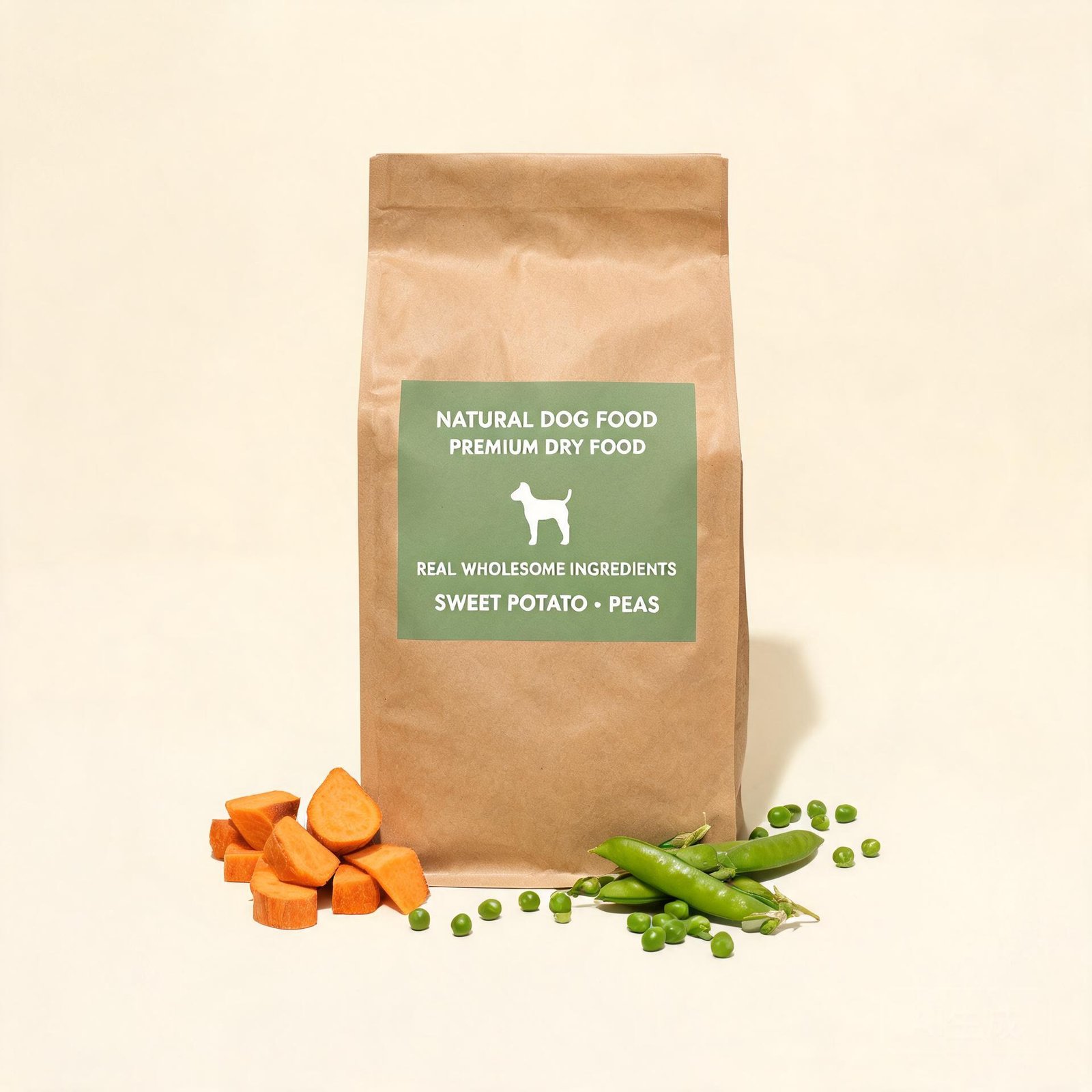
- Real produce — Whole sweet potato, pumpkin, peas, and carrots are genuinely nutritious.
- Limit the ingredient count — Fewer, more recognizable ingredients is usually a better sign of care.
- Beware of “and/or” — That phrase lets a manufacturer swap ingredients on a whim.
Switching foods the right way
Once you’ve found a label you trust, don’t dump the old bag in one day. Sudden diet changes are one of the most common causes of upset stomachs, and the transition they’re referring to is usually a gradual one spanning 7 to 10 days. Start by replacing about a quarter of the old food with the new, then slowly increase that proportion every couple of days. Patience here is the difference between a swap your pet barely notices and one that sends them to the vet.
Ready to feed with confidence?
Explore our vet-formulated recipes made with named proteins and real whole ingredients.